


Founder Story: The Youth Entrepreneurship Catalyst
I kept watching teens with big ideas fail — not from lack of ambition, but lack of structure.
Origin Story
I started noticing a pattern long before Satin Gloves existed.
Teens had ideas. They had motivation. They had access to tools I never had at their age.
What they didn’t have was the in-between.
No one taught them how to price. Budget. Validate an idea. Understand profit. Recover from something not working.
At the same time, I was watching parents — brilliant, caring parents — panic quietly.
They wanted to support their kids’ ideas without taking over.
They wanted to help without ruining confidence.
They were Googling advice written for adults with MBAs — not teens with creativity and zero structure.
And I realized: We were waiting too long to teach financial literacy.
By the time most people learn money, shame has already set in. Confidence has already been shaken.
Satin Gloves was created to intervene earlier.
To give teens a framework for execution — and the confidence that comes from making something real.
To teach business as a life skill, not a pitch competition.
To help parents guide without controlling.
Satin Gloves exists to take a teen from:
“I have an idea”
to
“I know how to try.”
Satin Gloves empowers young entrepreneurs—specifically teens—to confidently launch and grow businesses through practical financial education, mindset training, and structured guidance. Founded by Rehana Sewoatsri, a financial educator and business mentor with more than 16 years of accounting and consulting experience, Satin Gloves teaches age-appropriate financial fundamentals, business strategy, and money mindset.
MISSION
Satin Gloves’ mission is to equip teens with the financial knowledge, business skills, and confidence they need to turn ideas into real, sustainable businesses.
VISION
Satin Gloves envisions a future where teens confidently manage money, lead their own ventures, and develop the skills that lay the foundation for lifelong independence, resilience, and impact.

Founder Story: The Blended Family Financial Strategist
I wasn’t just managing money — I was managing meaning, values, and futures across two households.
Origin Story
No one prepares you for the economics of a blended family.
By 7 a.m., I’d already switched parenting styles multiple times.
Different kids. Different needs. Different rules from another household.
And somewhere in the middle of permission slips, homework, and dinner planning, I realized something:
I wasn’t just carrying the mental load — I was carrying the financial vision.
I was thinking about allowances, values, responsibility, future stability — while coordinating with co-parents who didn’t always share the same priorities.
Traditional financial advice assumes:
One household. One set of values. One decision-maker.
That’s not real life for millions of women.
I’d lie awake at night wondering:
Am I pushing too hard — or not enough?
Are they learning responsibility, or just compliance?
Is there still time to break cycles I never chose?
And I couldn’t find a single financial literacy program that addressed this reality.
So Mula Momma was born — not out of theory, but out of necessity.
It’s for the woman leading a complex household without a manual.
For the bonus mom, stepmom, or blended family leader trying to teach money, values, and resilience while influence is divided.
Mula Momma doesn’t just teach budgeting.
It teaches family leadership in non-traditional systems.
I am the Founder of Mula Momma, a for-profit education and community platform that empowers bonus moms and blended families through financial literacy, life skills, and structured mentorship. Mula Momma addresses a critical gap by equipping women in family leadership roles with practical financial education, structured life frameworks, and resources that support long-term family stability and generational wealth.
MISSION
To empower women in blended families with financial education, structured life frameworks, and practical tools that strengthen households and create lasting generational impact.
VISION
A future where every blended family has access to financial knowledge, structured life frameworks, and support systems that lead to economic stability and empowered generations.

Niacin Educators
Niacin Educators is an education-first financial learning platform founded by Rehana, created to help women reclaim confidence through understanding their numbers. With a background in accounting and finance, Rehana transitioned from consultant to educator after recognizing that many women were building successful businesses while feeling disconnected from their finances.
Rather than managing finances on behalf of women, Niacin Educator focuses on teaching women how to read, understand, and trust their financial data. Through accessible courses, workshops, and practical resources, women gain clarity, reduce overwhelm, and develop the confidence needed to make informed business and wealth decisions.
Niacin Educator exists to make financial education approachable, shame-free, and empowering—supporting women in building sustainable businesses, personal wealth, and long-term generational impact.
MISSION
Niacin Educator’s mission is to empower women with financial education and strategic clarity so they can understand their numbers, make confident decisions, and build sustainable businesses and long-term wealth.
VISION
Niacin Educators envisions a future where women are financially literate leaders—owning, growing, and sustaining businesses that drive economic stability, mobility, and generational impact.
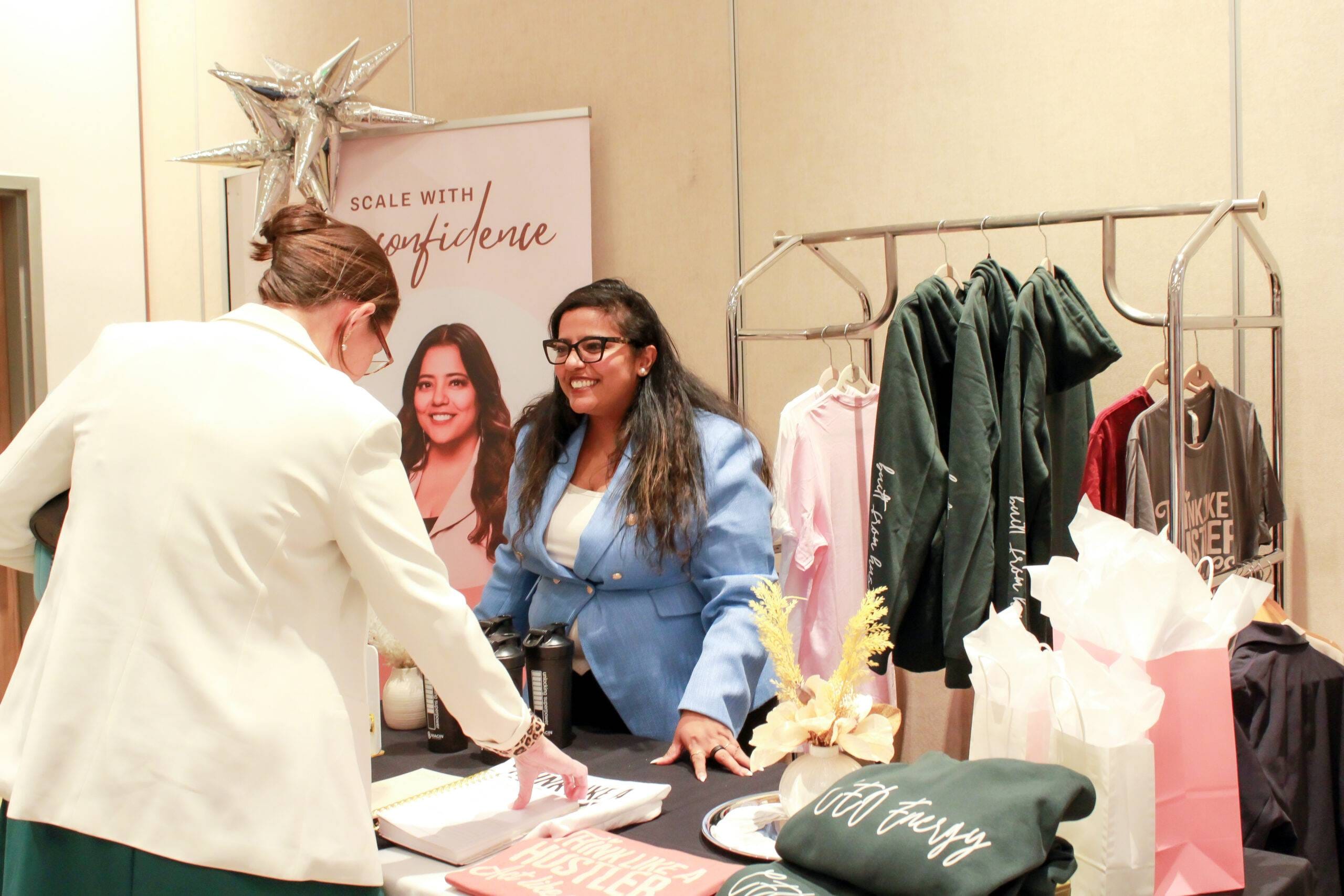
Founder Story: The Financial Clarity Architect
I wasn’t confused by finance — I was confused by why brilliant women felt stupid around it.
Origin Story
I spent over 16 years in accounting and consulting, managing finances for businesses that were objectively successful. Six figures. Multiple revenue streams. Growth year over year.
And behind closed doors, I kept hearing the same thing from women:
“I don’t really understand my numbers.”
“I just trust my bookkeeper.”
“I’ll look at it later.”
What struck me wasn’t a lack of intelligence — it was a disconnect.
These women could architect brands, manage teams, create offers out of thin air… and still avoid opening QuickBooks like it was a personal failure.
I realized the problem wasn’t discipline. It wasn’t motivation. It wasn’t even math.
It was translation.
Financial education had been built for linear thinkers — not for creative, neurodivergent, idea-driven minds. We told women to “just get organized” while ignoring how their brains actually worked.
At the same time, I was living it myself.
Running businesses. Losing my phone while holding it. Saving hundreds of posts. Redesigning things at 2 a.m. instead of checking my numbers.
That’s when Niacin Educators was born — not to manage women’s finances for them, but to teach them how to read, understand, and trust their numbers without shame or self-betrayal.
Niacin exists for the woman whose Notes app knows she’s brilliant — even when her financial systems don’t yet reflect it.